Section outline
-
Given the biosecurity challenges faced by urban forest microbiomes, several strategies have been proposed to protect and manage these microbial communities:
· Regular monitoring: Continuous microbial monitoring helps detect biosecurity threats early, allowing city managers to respond proactively. High-throughput sequencing and microbial profiling are increasingly used to monitor soil health and detect the presence of invasive pathogens (5,6)
· Promoting beneficial microbial communities: Techniques like bioaugmentation (adding beneficial microbes to soil) and organic soil amendments can improve soil health and increase microbial diversity. For instance, introducing specific fungal species can enhance nutrient availability and boost tree resilience to environmental stressors (2,14).
· Integrated biosecurity policies: Urban planning and biosecurity policies can mitigate microbial threats. Policies might include guidelines for tree planting, such as avoiding non-native species that could harbor invasive microbes, incorporating microbiome insights into urban green infrastructure and implementing quarantine measures for imported plants. Urban-specific threats to microbiomes require specific strategies such as designing green corridors to enhance connectivity between fragmented urban forests. Coordinated efforts between public health officials, urban planners, and environmental scientists are crucial (2,14).
· Community engagement and education: Public involvement is key to successful biosecurity in urban forests. Programs to educate residents about the importance of avoiding soil or plant material movement can reduce the spread of invasive species. Citizen science initiatives involving the public in monitoring tree and soil health are also gaining popularity (2,14).
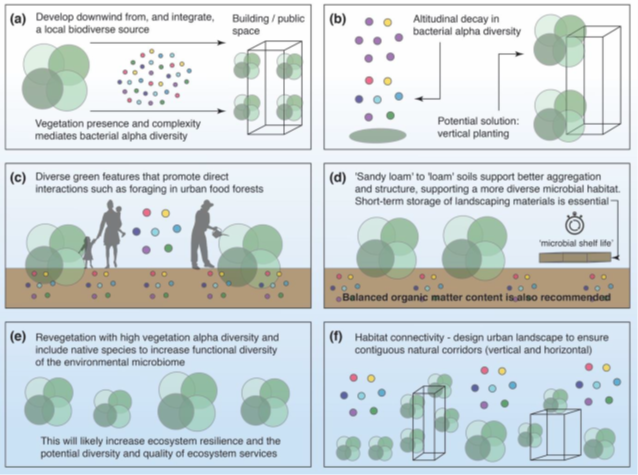
Image 3. Key strategies for enhancing urban microbiomes, including vegetation complexity, habitat connectivity, biodiverse revegetation, and soil management to promote ecosystem and microbial health (14).