Section outline
-
Urban forest microbiomes interact with human health in multiple pathways, including airborne transmission, water systems, urban infrastructure interactions, direct contact with trees, and additional soil-mediated processes (6,9).
· Airborne pathways
The microbial communities in the air ,"aerobiome ", play a vital role in urban forest ecosystems and human health. Urban forests influence the diversity of the aerobiome by releasing microbial propagules from their canopies, which interact with airborne populations and settle on urban surfaces. This microbial exchange contributes to improved air quality and reduced atmospheric pollutants (5). The composition of the aerobiome varies with land use, influenced by the balance between vegetation and urban infrastructure (6). Epiphytic microbes on plant surfaces also contribute significantly to the aerobiome, enriching it with beneficial species that support ecosystem health (14).
· Water Pathways
Urban forest microbiomes play a crucial role in maintaining water quality and hydrological balance acting as natural filters, breaking down harmful pollutants such as hydrocarbons, heavy metals, and excess nutrients in stormwater, to supports cleaner water systems and reduces contamination risks (10,2). Additionally, the use of treated wastewater for irrigation enriches soil microbial diversity, fostering tree health and enhancing ecosystem resilience. These beneficial microbes improve nutrient cycling and pollutant degradation, contributing to urban forest vitality (11,12). However, irrigation practices with untreated or poorly treated wastewater can introduce harmful pathogens, antibiotic-resistant genes, and chemical pollutants into forest soils, posing significant threats to both public health and ecosystem stability (10,2).
· Urban infrastructure
Urban infrastructure, including buildings and sewage systems, directly interacts with urban forest microbiomes, shaping their composition and functions. Microbial propagules from forest canopies settle on urban surfaces, enhancing microbial diversity (6). Conversely, building runoff introduces pollutants or new microbial species into forest soils, potentially disrupting their balance (10,12). Sewage systems can also influence urban forest microbiomes. Properly treated wastewater supports soil microbial diversity and tree health, enhancing ecosystem services like air purification and carbon sequestration. However, poorly managed sewage risks introducing pathogens, compromising both forest and human health (10).
· Direct contact with urban forests
The phyllosphere serves as a direct link between humans and urban forest microbiomes. During recreational or work activities in urban forests, humans come into contact with these microbial communities. Beneficial microbes from the phyllosphere can strengthen skin immunity and reduce allergic reactions, but in some cases, fungal spores or pathogenic bacteria on leaf surfaces can trigger infections or allergies in sensitive individuals (6,7,2).
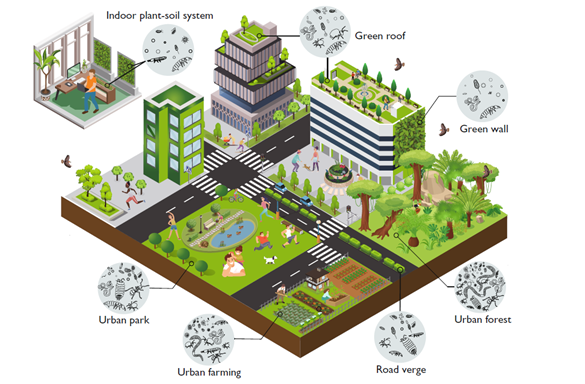
Image 1. Urban microbiomes interact across soil, rhizosphere, phyllosphere, plant-atmosphere, infrastructure interfaces, supporting critical ecosystem functions despite urbanization impacts (12).